Signals, Signs and Lights

Communication and visibility in traffic

Correct communication in traffic

Lighting, signals, and signs are essential for safe communication between road users.

§ 33. Lighting

Basic rule (Subsection 1)

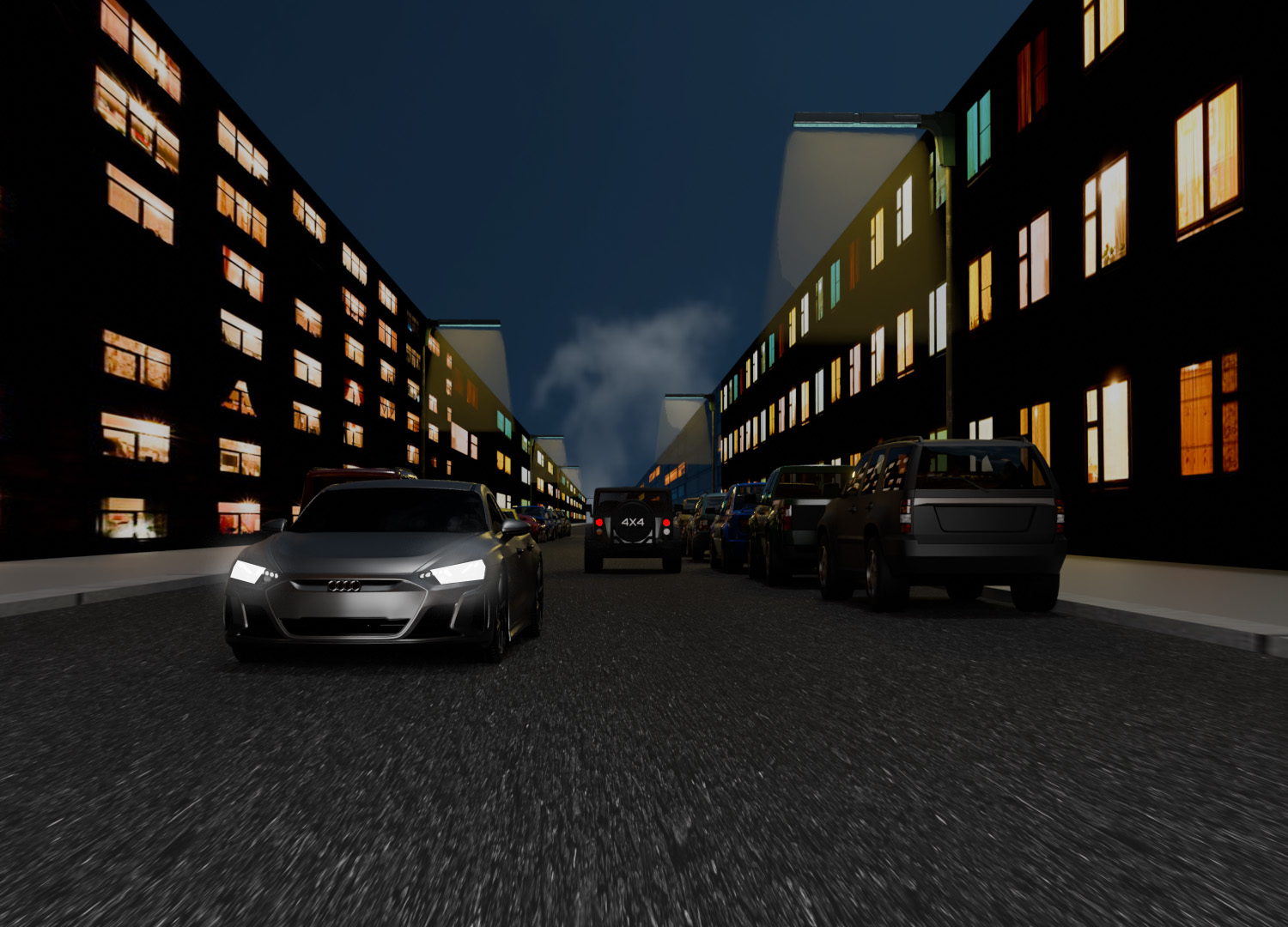
Lighting-up time: During lighting-up time, the prescribed lights must be switched on.

On several coupled vehicles, it is only necessary to keep the rear lights lit at the rear of the vehicle combination and the number-plate lighting lit at the rearmost number plate.

High beam — When it must be used (Subsection 2)

High beam (long light) must be used when the driver's visibility, taking the vehicle's speed into account, is insufficient for safe driving.

High beam — When it must not be used (Subsection 3)

High beam must not be used:
  • On stretches where the road is sufficiently lit
  • When meeting another vehicle at a distance where the driver may be dazzled
  • When meeting a train along the road, if the high beam could dazzle
  • When driving behind another vehicle, if the vehicle ahead can be dazzled by the high beam and the use of low beam provides sufficient visibility for safe driving
Low beam and special lights

Low beam (Subsection 4)

If high beam (long light) is not required under subsection 2, low beam (short light) may be used. If high beam (long light) must not be used under subsection 3, low beam (short light) must be used.

Fog lights (Subsection 5)

Fog lights may only be used in fog and heavy precipitation and may in such cases replace the mandatory lights.

Auxiliary lights may only be used for the purpose for which they are intended.

Prohibitions and restrictions

Dazzling (Subsection 6)

Lights must not be used in a way that may dazzle other drivers.

Illegal lights (Subsection 7)

The use of lights and reflective devices other than those permitted or required by this act or the rules laid down pursuant to the act is prohibited.

§ 33a. Driving outside lighting-up time

Daytime driving (Subsection 1)

Low beam on motor vehicles: When driving outside lighting-up time, low beam (short light) must be used on motor-driven vehicles.

For motorised equipment, this only applies if the equipment is fitted with low-beam lights.

Instead of low beam, fog lights or special daytime running lights may be used.

Exemptions (Subsection 2)

The Minister for Transport, Building and Housing may lay down rules granting exemption from the obligation to use low beam etc. for:

  • Occasional driving with vintage vehicles
  • Driving with vehicles under construction or repair

General prohibition (Subsection 3)

§ 33, subsection 7, also applies when driving outside lighting-up time.

§ 34. Vehicles without lights

Marking (Subsection 1)

Vehicles that are not required to be fitted with lights must, during lighting-up time, be marked in accordance with the provisions laid down by the Minister for Transport, Building and Housing.

Riders (Subsection 2)

The Minister for Transport, Building and Housing may lay down provisions on the marking of riders.

§ 35. Stopping and parking

Required lighting (Subsection 1)

If a vehicle is stopped or parked on the road during lighting-up time, the following must be switched on:
  • The vehicle's position lights (parking lights)
  • Rear lights
  • Number-plate lighting

§ 37. Signals and signs

Sound and light signals (Subsection 1)

When necessary to prevent or avoid danger, drivers must draw attention to the danger by means of a sound or light signal or in another suitable manner.

During lighting-up time, the driver of a motor vehicle must use a light signal instead of a sound signal, unless the danger is immediate.

Light signal: Given by flashing the vehicle's high beam or low beam.

Direction indication (Subsection 2)

Drivers must give a signal before:

  • Pulling out from the edge of the road
  • Turning and swinging
  • Changing lanes on a motorway

Signalling (Subsection 2 continued)

The signal must be given using indicators where fitting indicators on the vehicle is required or permitted, and otherwise by extending an arm horizontally out to the side.

Hazard lights (Subsection 3)

The Minister for Transport, Building and Housing may lay down rules on the use of hazard lights, including rules on the mandatory use of hazard lights in the event of sudden congestion or other immediate danger on a motorway.

Stopping and reducing speed (Subsection 4)

Drivers who stop or quickly reduce speed must give a signal when necessary to guide others. The signal must be given by using the stop light or by extending an arm upwards.

§ 36. Exemptions from lighting

Exemptions (Subsection 1)

§ 35 does not apply if:

  • The road is sufficiently lit so that the vehicle can be clearly seen at a suitable distance
  • The vehicle is stopped or parked in a car park or another marked parking area

Two-wheeled vehicles (Subsection 2)

Lighting is also not required for:
  • A two-wheeled bicycle
  • A two-wheeled moped
  • A two-wheeled motorcycle without a sidecar

If the vehicle is left along the outer edge of the road.

Important points to remember

Low beam always onOn motor vehicles around the clock
Avoid dazzlingHigh beam only when necessary
Signal in timeWarns other road users
Remember: Correct lighting and signalling saves lives!